Key Takeaways
- AI chatbots are evolving from support tools to effective sales agents within Conversational CRM.
- They personalize interactions using real-time data, past behavior, and CRM insights.
- Bots now handle lead qualification, product recommendations, upselling, and payment processes.
- Netiks' Genetiks AI Assistant demonstrates how tailored, multilingual bots can enhance sales and support in regulated industries.
- Conversational CRM increases conversion rates, lowers costs, and scales easily across industries.
Once viewed merely as customer service helpers, AI-powered chatbots have radically transformed. Today, they’re not just answering FAQs, they’re closing deals, nurturing leads, and quietly becoming some of the best-performing salespeople on the digital floor. Welcome to the era of Conversational CRM, where bots don’t just talk, they sell.
Gartner predicts that Conversational AI will reduce contact center agent labor costs by $80 billion in 2026 *
* Gartner
The Shift: From Reactive Support to Proactive Sales
Basic chatbots operate on rules: they recognize keywords and serve up pre-written responses. Conversational AI, however, is different. These advanced bots use natural language understanding (NLU) and machine learning to comprehend context, intent, and sentiment. They can hold real conversations, not just follow scripts.
When these bots are integrated into CRM platforms, they become more than just helpful, they become strategic. They can see who the customer is, what they've bought before, and what they might need next. This ability to connect conversation to customer history allows for real-time, personalized engagement that mimics a knowledgeable human assistant.
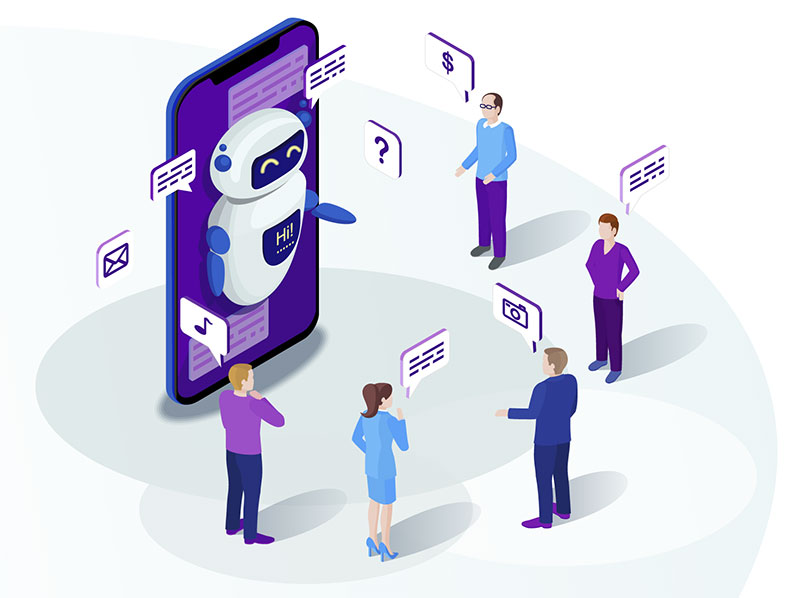
How It Works: Behind the Scenes of a Conversational CRM
A conversational CRM system connects multiple layers of technology:
Natural Language Processing (NLP)
Allows the chatbot to understand human input, even with slang, typos, or informal phrasing.
CRM Integration
Pulls customer data like purchase history, preferences, and past conversations into the conversation.
Real-Time Analytics
Tracks behavior during the conversation (like hesitation, product interest, or time spent browsing).
Personalization Engine
Offers tailored suggestions, discounts, or answers depending on the customer’s profile and behavior.
Multi-channel Deployment
Operates on chat, email, social media, voice assistants, and mobile apps simultaneously.
For example, a customer browsing a product page may get a message from a bot saying, “Hi! I see you’ve checked out this item a few times. Would you like help choosing a size or checking matching accessories?” That’s not random. That’s intelligent, data-driven engagement.
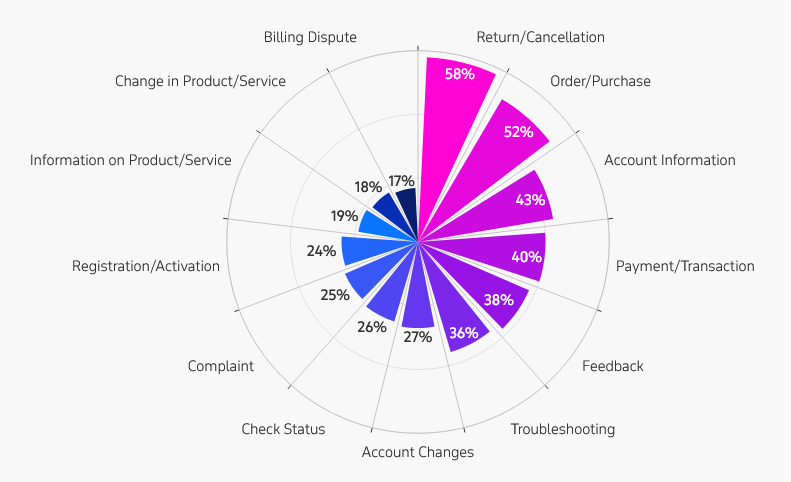
Customer service chatbots’ resolution rates by issue type
Source: Itransition
Sales and Upselling Now in the Bot's Hands
The results are impressive. Conversational AI can now handle:
• Lead generation and qualification: Identifying which visitors are potential buyers and guiding them through funnels.
• Product recommendations: Based on browsing behavior and purchase history.
• Abandoned cart recovery: Gently reminding users of forgotten items, often with timely offers or suggestions.
• Upselling and cross-selling: Offering better-value packages or complementary products right in the chat.
• Instant payment initiation: Shortening the time from interest to purchase.
Whether it’s a customer asking about pricing or one hesitating at checkout, a well-designed AI assistant can adapt its tone, make relevant offers, and help complete the transaction, often better than a busy human rep.
The global conversational AI market size is expected to grow from $12.24 billion in 2024 to $61.69 billion by 2032 *
* Itransition
The Genetiks AI Assistant: Netiks' Own Conversational Sales Partner
At Netiks, we’ve seen this transformation firsthand. Our own Genetiks AI Assistant was designed to bring conversational CRM to life, acting as an intelligent sales partner.
Genetiks blends NLP with deep CRM integration to deliver smooth, meaningful conversations that feel intuitive. It can:
• Interact with users across banking, telecom, or e-commerce platforms.
• Understand questions in Arabic, English, or French, switching languages fluidly.
• Retrieve personal information like account balances or order status.
• Make recommendations based on a customer’s history and preferences.
• Assist with onboarding and form submissions using OCR, liveness detection, and identity verification.
What makes Genetiks unique is its customizability and compliance with data security standards, making it especially suitable for sensitive sectors like banking and government. It’s not just another bot; it’s a virtual assistant aligned with the business’s voice and goals.

Key Benefits of Conversational CRM and AI Assistants
The real power of conversational CRM lies in the long-term value it brings:
1. Higher Conversion Rates
Bots reduce friction during checkout or browsing by offering help when it's needed most. A quick product suggestion or a timely discount can nudge the customer to act.
2. Lower Operational Costs
With AI handling 60–80% of standard queries and lead qualification, human teams can focus on high-value interactions.
3. Improved Customer Experience
No more waiting for business hours or sitting in a queue. AI chatbots are instant, always-on, and can remember past conversations to provide continuity.
4. More Sales Opportunities
By recognizing buying signals and suggesting upgrades, bots actively boost cart value and customer lifetime value.
5. Scalability
From a single entrepreneur to an enterprise, conversational CRM grows with the business. Whether you’re reaching 100 customers or 10,000, your AI assistant doesn’t miss a beat.
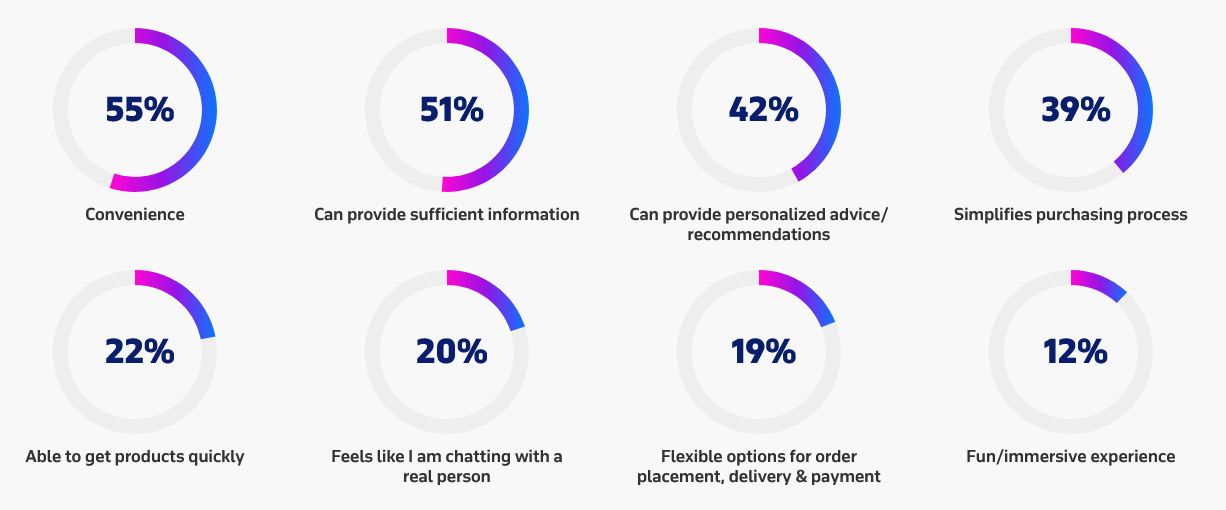
Reasons for wanting to try GenAI conversational commerce
Source: Itransition
Common Use Cases Across Industries
Here’s how different sectors are leveraging conversational CRM:
Banking & Finance
Automated onboarding, loan application guidance, account inquiries, and upselling of financial products.
Retail & eCommerce
Style recommendations, promotional alerts, and personalized product bundles.
Telecom
Plan upgrades, service issue diagnosis, and real-time billing inquiries.
Healthcare
Appointment booking, post-visit follow-up, and wellness product suggestions.
Education
Course recommendations, admission guidance, and student onboarding.
Whether it’s helping a user find the right product or walking them through a multi-step form, these AI assistants are becoming indispensable.
Challenges: What to Watch Out For?
Of course, even smart bots need boundaries. The biggest challenges include:
Misinterpreting Intent
Even advanced AI can sometimes misunderstand vague or emotional input.
Data Security
Sensitive information needs to be handled with strict compliance.
Balance with a Human Touch
Not all issues can be resolved with automation; bots should always offer a handover option.
At Netiks, we've addressed these concerns by ensuring Genetiks offers smooth escalation to live agents when needed and is hosted in secure environments.
Final Thoughts: AI as a Sales Ally, not a Replacement
AI chatbots are no longer just glorified answering machines. They’re becoming strategic assets in CRM and sales, capable of capturing leads, driving purchases, and keeping customers engaged without sounding robotic.
As AI continues to evolve, the difference between a bot and a human rep will become even harder to detect, especially when that bot is backed by data, context, and the ability to act in real time.
The beauty of this transformation is that it’s scalable. Whether you’re a startup or an enterprise, tools are available to launch your own conversational sales agent without needing a full dev team.
With tools like Genetiks AI Assistant, Netiks is helping businesses across industries reimagine what customer interaction looks like, not just faster, but smarter, more personal, and undeniably more effective.
In 2025 and beyond, companies that treat AI bots as relationship builders, not just automation tools, will lead in both revenue and reputation.