Key Takeaways
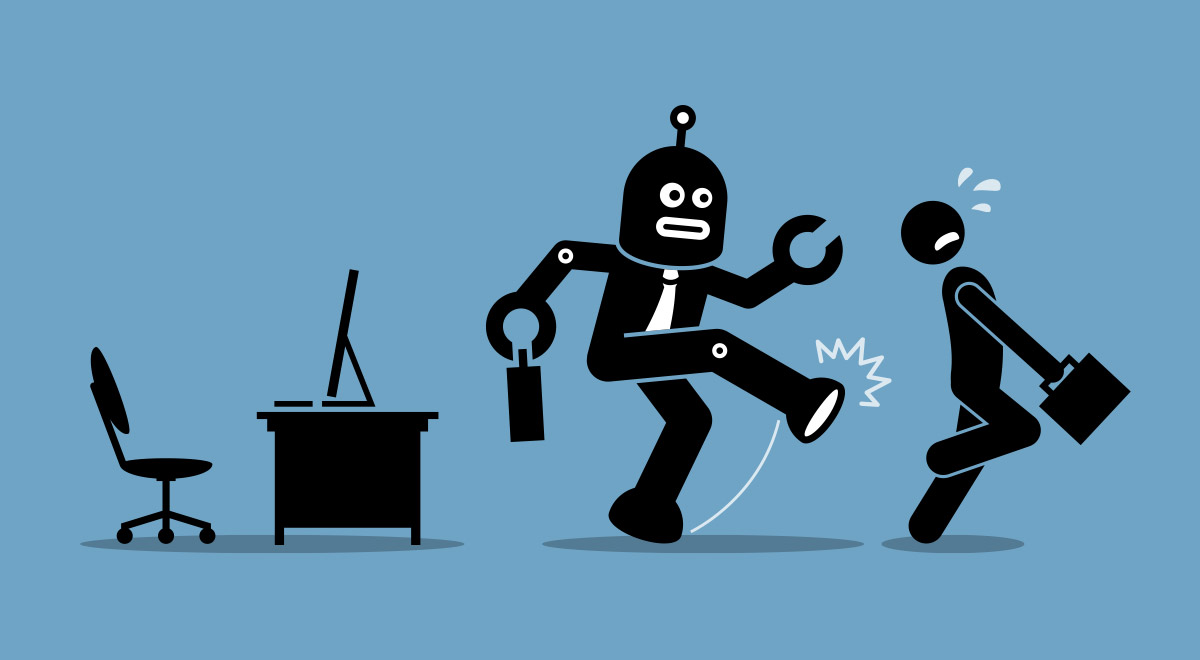
- AI isn’t replacing people, it’s taking over repetitive tasks: Most roles are evolving, not disappearing, as AI handles routine work.
- The value of human work is shifting upward: As automation increases, creativity, judgment, and strategic thinking matter more.
- Working with AI is becoming a competitive advantage: Individuals and businesses that collaborate with AI move faster and smarter.
- Responsible AI leads to more human-centered work: When used thoughtfully, AI supports better decisions without removing human control.
The Question Behind the Headlines
Last Monday morning, something strange happened.
My “colleague” finished a task in seconds. No coffee break. No follow-up questions. No complaints about the Wi-Fi. Just a clean result, delivered instantly.
That colleague was AI.
Naturally, the first thought that crossed my mind was the one many professionals quietly carry today:
“Is AI taking my job?”
But after a moment, and a second coffee, a better question emerged:
Is AI taking my job… or just saving me from the parts I never enjoyed anyway?
Meet AI: Not the Job Thief, the Task Magnet
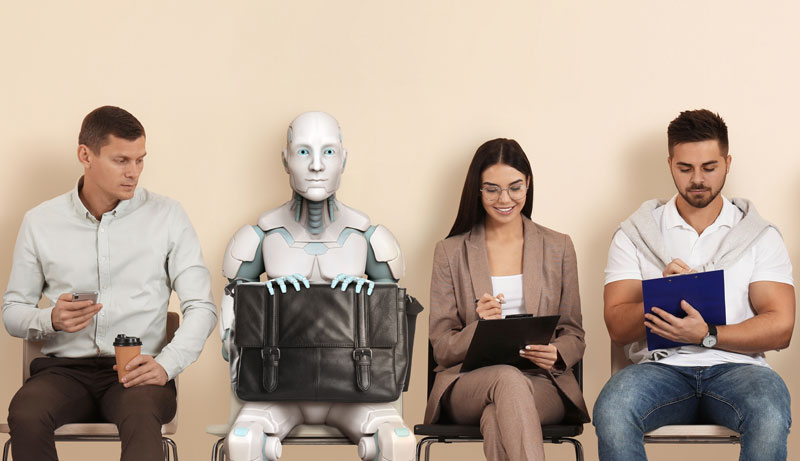
Despite the dramatic headlines, AI hasn’t shown up at workplaces asking for our titles, desks, or parking spots. What it has taken, quite enthusiastically, are repetitive tasks, manual processes, and time-consuming admin work.
Data entry. Scheduling. First drafts. Pattern spotting.
In fact, studies show that up to 60% of today’s jobs consist of tasks that can be partially automated, not fully replaced. The keyword here is partially.
Which means AI isn’t replacing roles, it’s unbundling them.
And that changes everything.
Up to 50% of jobs could be fully automated by 2045 *
* Goldman Sachs
A Day in the Office, Reimagined
Imagine this:
- AI handles the reports before you arrive.
- It organizes data while you prepare ideas.
- It summarizes meetings while you focus on decisions.
- It processes information at machine speed, so you can work at human speed.
Suddenly, your day has fewer interruptions and more meaningful moments.
Not because AI is better than you, but because it’s better at the boring stuff.
And let’s be honest: no one ever dreamed of a career in “manual spreadsheet reconciliation”.
In fact, organizations that integrate AI thoughtfully are seeing productivity gains of 20–30% in certain roles, not because people are working more, but because they’re working better.
So… Are Jobs Disappearing? Or Just Evolving?
Yes, some roles will change. They always have.
When email arrived, it didn’t eliminate communication; it transformed it.
When calculators became mainstream, accountants didn’t disappear; they became strategists.
AI follows the same pattern.
According to global workforce research, AI is expected to create millions of new roles over the next decade, especially in areas that combine technology with human judgment, such as AI oversight, experience design, ethics, strategy, and innovation.
In other words:
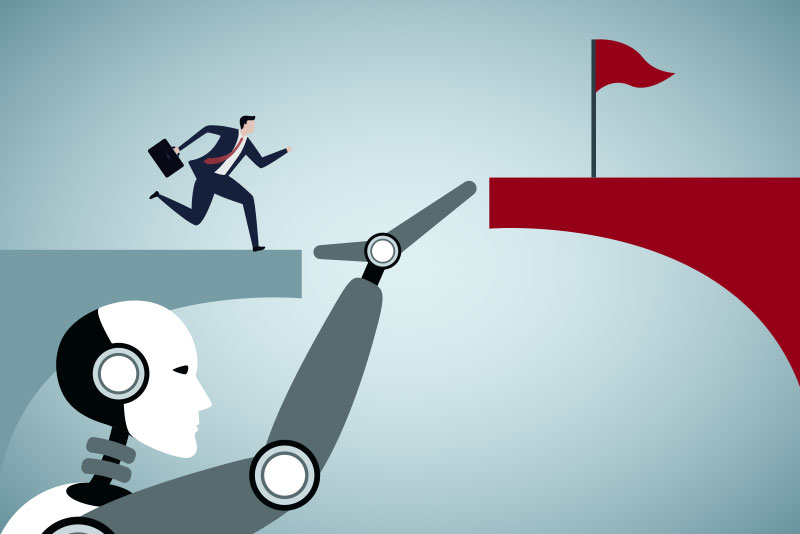
The future doesn’t belong to people who compete with AI; It belongs to people who collaborate with it.
Jobs AI Still Struggles With (Good News for Humans)
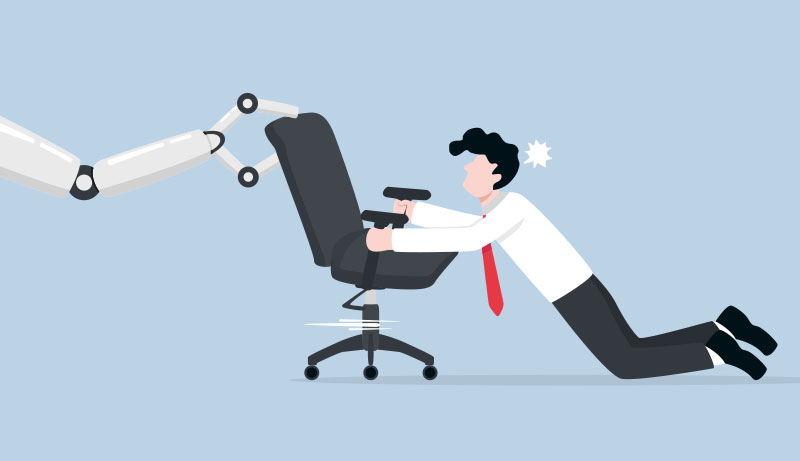
AI is impressive, but it still struggles with things humans do naturally:
- Understanding context beyond data
- Reading emotions in a room
- Navigating ambiguity
- Creating original ideas with cultural nuance
- Building trust, empathy, and relationships
You can ask AI to analyze numbers; You can’t ask it to genuinely care.
And in leadership, creativity, customer experience, design, and decision-making, caring still matters.
A lot.
The use of AI technology could boost labor productivity growth and global GDP by as much as 7% over time *
* Goldman Sachs
The Real Shift: From “Doer” to “Thinker”
The biggest change AI brings isn’t job loss, it’s job elevation.
As machines take over execution-heavy tasks, humans move closer to:
- Strategic thinking
- Problem solving
- Creative direction
- Ethical decision-making
- Human-centered design
Ironically, AI may be the very thing that pushes us back toward being more human at work.
Less busywork. More impact.

So… Is AI Taking Your Job?
Unlikely.
But it is asking you an important question: “What do you want to do once I handle the rest?”
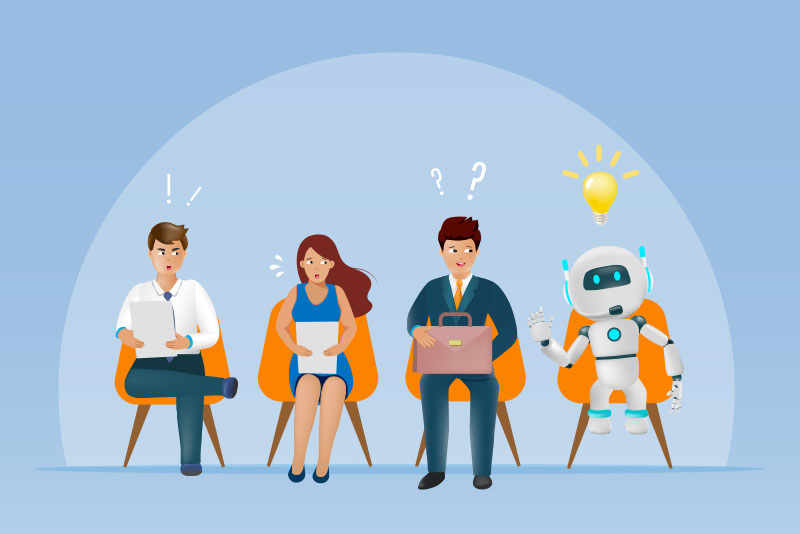
Because the future of work isn’t human vs machine; It’s human plus machine.
And in that partnership, humans still lead.
AI simply helps carry the load, quietly, efficiently, and without asking for a coffee break.
What This Means for Businesses and for Netiks
At Netiks, we believe the future of AI isn’t about replacing people, it’s about elevating them. When designed and deployed responsibly, AI becomes an intelligent layer that enhances human judgment, accelerates innovation, and enables businesses to focus on what truly matters: people, purpose, and progress.
The most successful organizations won’t be those that automate blindly, but those that build AI with intention; systems that are transparent, secure, and human-centered by design. As AI continues to evolve, our role is to ensure it remains a force that amplifies human potential, not one that competes with it. That’s how technology earns trust, and how the future of work becomes something to look forward to.