
Key Takeaways
- The next evolution of enterprise AI is not a single smarter assistant but coordinated teams of AI agents that combine specialized expertise to support better decisions.
- Multi-agent systems mirror how high-performing organizations already operate, bringing together different perspectives to reduce blind spots, validate information, and strengthen recommendations.
- As AI teams grow, coordination and orchestration become just as important as the intelligence of individual agents, ensuring they work together toward shared business objectives.
- The organizations that gain the greatest value from AI will combine the speed and scale of AI with human judgment, leadership, and accountability to make more informed and resilient decisions.
Enterprise AI Is Entering Its Teamwork Era
One person rarely makes the most important organizational decisions.
A loan approval, a compliance review, a customer onboarding process, or a strategic business decision usually involves several specialists looking at the same situation from different angles.
Risk sees one thing. Compliance sees another. Operations may identify a constraint. Sales may understand the customer context.
So why should enterprise AI work differently?
As companies move beyond individual AI assistants, a new model is emerging: multi-agent systems, where specialized AI agents collaborate to produce stronger decisions.
The future of enterprise AI lies in coordinated teams of AI agents rather than increasingly powerful individual assistants.
75% of large enterprises are expected to adopt multi-agent systems by 2026 *
* Gartner
Why One AI Isn't Enough
The biggest limitation of today's AI is not intelligence; it’s perspective.
Complex decisions rarely depend on one answer. They require multiple viewpoints, careful validation, and the ability to balance competing priorities.
Consider a customer onboarding request. One AI agent might focus on speed and customer experience. Another evaluates compliance requirements. A third assesses risk, while another verifies documentation.
Individually, each agent sees only part of the picture. Together, they produce a more informed assessment than any single AI could generate alone.
Specialization has always strengthened decision-making. Multi-agent systems apply that same principle to AI.
AI Teams Mirror High-Performing Organizations
Imagine asking a compliance officer to make every decision for your organization. Or expecting a risk analyst to manage customer relationships, review legal requirements, and oversee operations at the same time. It wouldn't work because expertise is specialized.
Companies achieve better outcomes by bringing together people with different skills, perspectives, and responsibilities.
Multi-agent systems follow the same logic.
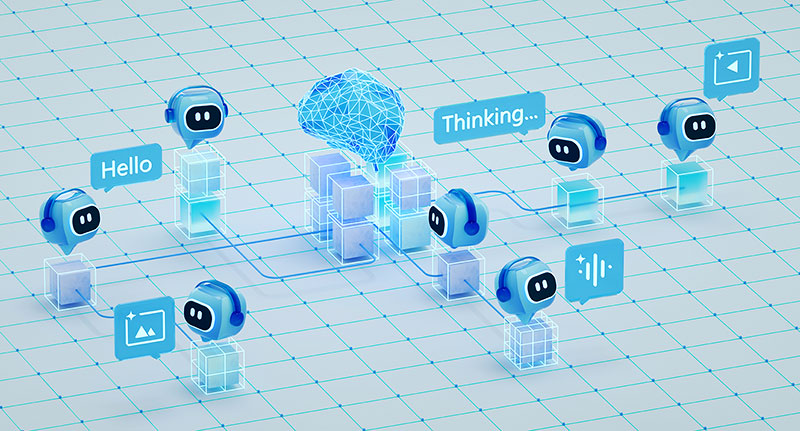
Instead of relying on a single AI assistant to handle every task, organizations can assign role-specific agents to planning, research, compliance, risk analysis, or customer interactions. An orchestrating agent then coordinates their contributions to produce a well-informed recommendation.
As enterprises become more complex, AI evolves in the same direction, shifting from individual assistants to coordinated teams of specialists.
The multi-agent systems market will grow at a compound annual growth rate (CAGR) of 48.4% through 2030 *
* Grand View Research
Better Decisions Come from Collaboration
Anyone who has participated in an important business meeting knows that the strongest decisions rarely emerge from the first idea presented. They improve through discussion.
Questions are raised. Assumptions are challenged. Risks are identified. Missing information is uncovered. Different perspectives help refine the outcome.
Multi-agent systems introduce the same dynamic into enterprise AI.
Individual AI agents can review each other's work, validate findings, identify inconsistencies, and contribute additional context before producing a recommendation.
The value of multi-agent systems lies in the quality of the decision-making process. By combining expert perspectives, institutions can reduce blind spots, strengthen confidence in recommendations, and make more informed decisions.
The Challenge Shifts to Coordination
As organizations deploy more AI agents, adding capabilities becomes only part of the challenge.
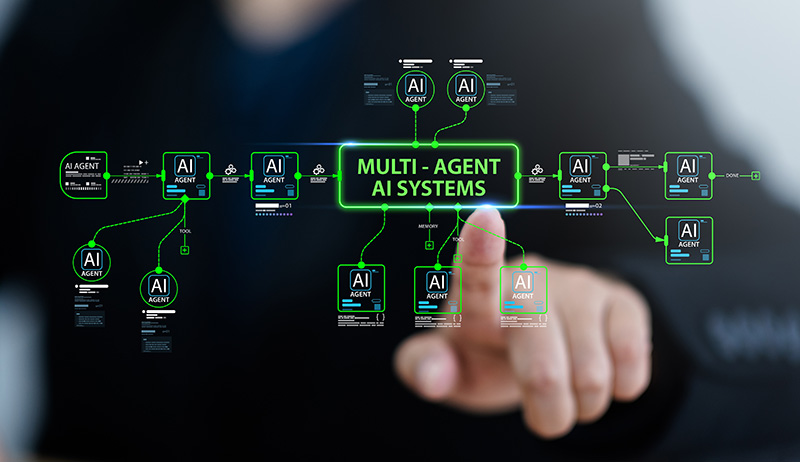
Without coordination, AI agents may duplicate work, overlook critical information, or produce conflicting outcomes. As AI teams grow, leaders must determine which agent should perform each task, how information should flow between them, and when human intervention is required.
This is where orchestration becomes essential.
An orchestrating agent serves as a team leader, assigning responsibilities, facilitating collaboration, and integrating individual contributions into a coherent recommendation.
Success will depend on more than the intelligence of individual agents. It will depend on how effectively they work together. The greatest advantage will belong to those who build AI teams that collaborate with purpose, operate in harmony, and remain aligned with business objectives.
The Best Decisions Will Still Need People
Even the most advanced AI team cannot fully understand an organization's priorities, culture, or appetite for risk. Strategic decisions are shaped by experience, business context, customer relationships, and organizational priorities that extend beyond data alone.
Multi-agent systems can gather evidence, analyze alternatives, identify risks, and recommend the best course of action. People remain responsible for choosing it and accountable for its outcome.
As AI takes on a greater share of operational work, human value shifts toward leadership, judgment, and accountability.
The strongest decisions will come from organizations that combine the speed and scale of AI with the experience and responsibility of people.
Conclusion
Enterprise success has never depended on one person having all the answers. It has always depended on bringing together the right people, with the right expertise, at the right time.
Multi-agent systems extend that same principle to artificial intelligence, allowing AI agents with distinct roles to collaborate in ways that reflect how high-performing organizations already operate.
The greatest competitive advantage will belong to organizations that know how to combine AI collaboration with human judgment, creating decision-making processes that are faster, more informed, and ultimately more resilient.
The future of enterprise intelligence won't be defined by one AI thinking harder. It will be defined by AI teams thinking together.